
Written by
Peregrine Treks & Tours
Peregrine Treks & Tours
Himalayan journeys planned from Kathmandu since 2002 — routes scouted personally before we sell them, and trail notes that shape every guide in this journal.

Peregrine Treks & Tours
Himalayan journeys planned from Kathmandu since 2002 — routes scouted personally before we sell them, and trail notes that shape every guide in this journal.
 South Asia
Sri Lanka packs an extraordinary range of experiences into a small island. In one trip, you can climb an ancient rock fortress, ride a train through rolling tea country, track leopards in a dry-zone forest, walk inside a colonial-era fort, surf warm Indian Ocean waves, and rest at a doctor-led wellness retreat.
The island is compact on a map, but slower on the road. Distances that look short can take three to four hours through mountain hairpins and small-town traffic. The best approach is to pick a region-by-region route rather than chase every attraction.
The top things to do in Sri Lanka fall into five broad categories: cultural heritage, wildlife safaris, hill country and tea estates, beaches and coastlines, and wellness. First-time visitors do well to combine at least three of those in a single loop, leaving time to rest between the active days.
The guide below covers 25 of the best experiences, organized by region, travel style, season, and trip length. Use it to build a route that fits your pace.
The best things to do in Sri Lanka for first-time visitors are climbing Sigiriya Rock Fortress, taking the scenic train from Kandy to Ella, tracking leopards in Yala National Park, and walking the historic ramparts of Galle Fort. Beyond those four, add Dambulla Cave Temple, Kandy and the Temple of the Tooth, the elephant gathering near Minneriya or Kaudulla, at least one south- or east-coast beach, and whale watching from Mirissa in season.
Combine culture, hill country, wildlife, and beach time rather than staying in a single region. For a luxury trip, add boutique hotels, private guiding, tea estate stays, naturalist-led safaris, an Ayurveda retreat, and a Maldives extension.
Season matters. The south and west coasts are best from December to March—the East Coast runs from May to September. Wildlife parks are busiest in the dry months, and the elephant gathering peaks from July to October.
Sri Lanka holds eight UNESCO World Heritage Sites, six national parks that see regular visitors, over 1,600 kilometers of coastline, a cool hill country ribboned with tea estates, and one of the oldest living traditions of Ayurveda. All of it fits inside an island smaller than Tasmania.
Travel Interest | Best Experiences |
|---|---|
Culture | Sigiriya, Dambulla, Kandy, Anuradhapura, Polonnaruwa, Galle Fort |
Wildlife | Yala, Wilpattu, Udawalawe, Minneriya, Sinharaja, Mirissa whales |
Beaches | Mirissa, Weligama, Tangalle, Bentota, Trincomalee, Arugam Bay |
Hill Country | Ella, Nuwara Eliya, Kandy to Ella train, tea factories, Pekoe Trail |
Wellness | Ayurveda retreats, yoga, slow travel, forest walks |
Adventure | Surfing, hiking, cycling, rafting, and rainforest walks |
The Cultural Triangle in the north-central dry zone holds Sigiriya, Dambulla, Anuradhapura, and Polonnaruwa. Kandy sits in the hills with the Temple of the Tooth. Galle Fort anchors the south coast with Dutch-colonial streets and sea walls.
Yala holds the world’s highest recorded leopard density. Wilpattu offers a wilder, quieter alternative. Minneriya and Kaudulla deliver the elephant gathering from July to October. Mirissa sends out boats to look for blue whales from roughly December to April.
The south coast (Mirissa, Weligama, Tangalle, Hiriketiya) runs from December to March. The east coast (Trincomalee, Pasikudah, Arugam Bay) runs from May to September. Each beach has a different feel, from surf to snorkeling to pure rest.
Ella, Nuwara Eliya, and the tea estates between Kandy and Haputale make up the cool green heart of the island. The Kandy to Ella train ride is one of Asia’s most famous scenic routes.
Ayurveda is not a spa day in Sri Lanka. Doctor-led retreats run week-long programs with daily consultations, herbal treatments, yoga, and a specific diet. Santani, Jetwing Ayurveda Pavilions, and Barberyn are among the serious names.
Sigiriya is Sri Lanka’s single most famous attraction, a fifth-century fortress on a 200-meter rock column rising out of flat jungle. You climb through the water gardens, past the ancient frescoes, and through the lion’s paws to a summit that opens across the green plain in every direction.
Go early. The gates open at 7:00 a.m., and the first hour beats the heat and the tour-bus crowds. The climb takes most visitors about 90 minutes up and an hour down. Wear sturdy shoes and carry water.
The climb suits culture lovers, photographers, and first-time visitors. Allow two to three hours and combine Sigiriya with Dambulla, Polonnaruwa, or Minneriya in the same loop.
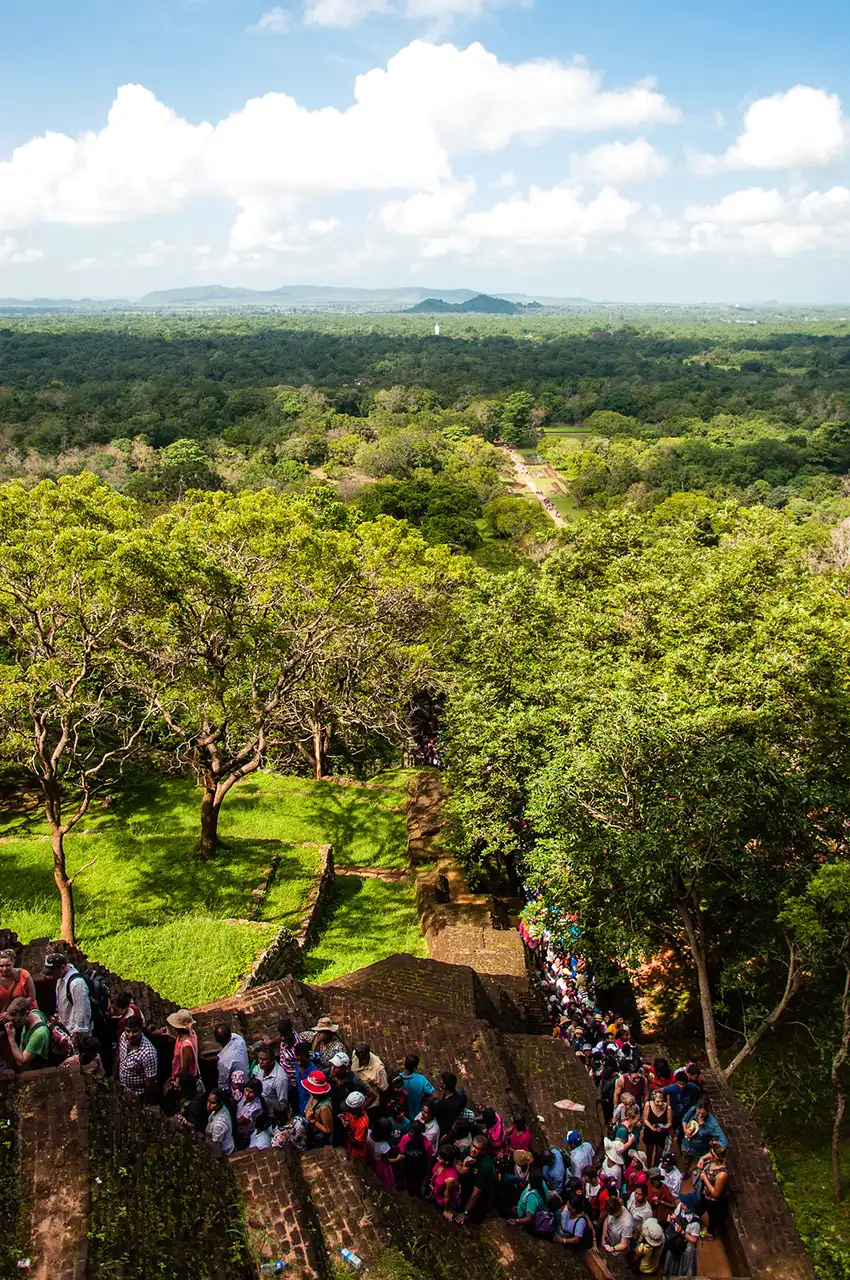
Joining the queue to climb the ancient Sigiriya Rock Fortress is one of the most popular things to do in Sri Lanka.
Dambulla is a sacred cave temple carved into a granite overhang, with five painted caves holding over 150 Buddha statues. The caves are cool and dark after the climb, and the murals run from ceiling to floor.
Cover shoulders and knees, and remove shoes before entering. A private guide adds context that the signs inside do not provide. Dambulla sits less than an hour from Sigiriya, so the two combine naturally in a single morning.
Allow one to two hours for the caves and the climb. Culture and temple lovers rate it among the island’s top sacred sites.
Kandy is the cultural capital of the hill country, built around a lake and crowned by the Temple of the Tooth, which houses a sacred relic of the Buddha. Evening puja ceremonies draw crowds of pilgrims, and the atmosphere inside the temple is genuine and moving.
Stay at least one night. Beyond the temple, the Royal Botanical Gardens at Peradeniya are worth two hours, and a Kandyan dance performance gives a short, vivid introduction to the island’s performing arts. During the Esala Perahera festival in July or August, the city fills with drumming, dancers, and decorated elephants, and hotels book out months in advance.
Plan one to two nights in Kandy to cover the temple, the gardens, and a cultural performance without rushing.
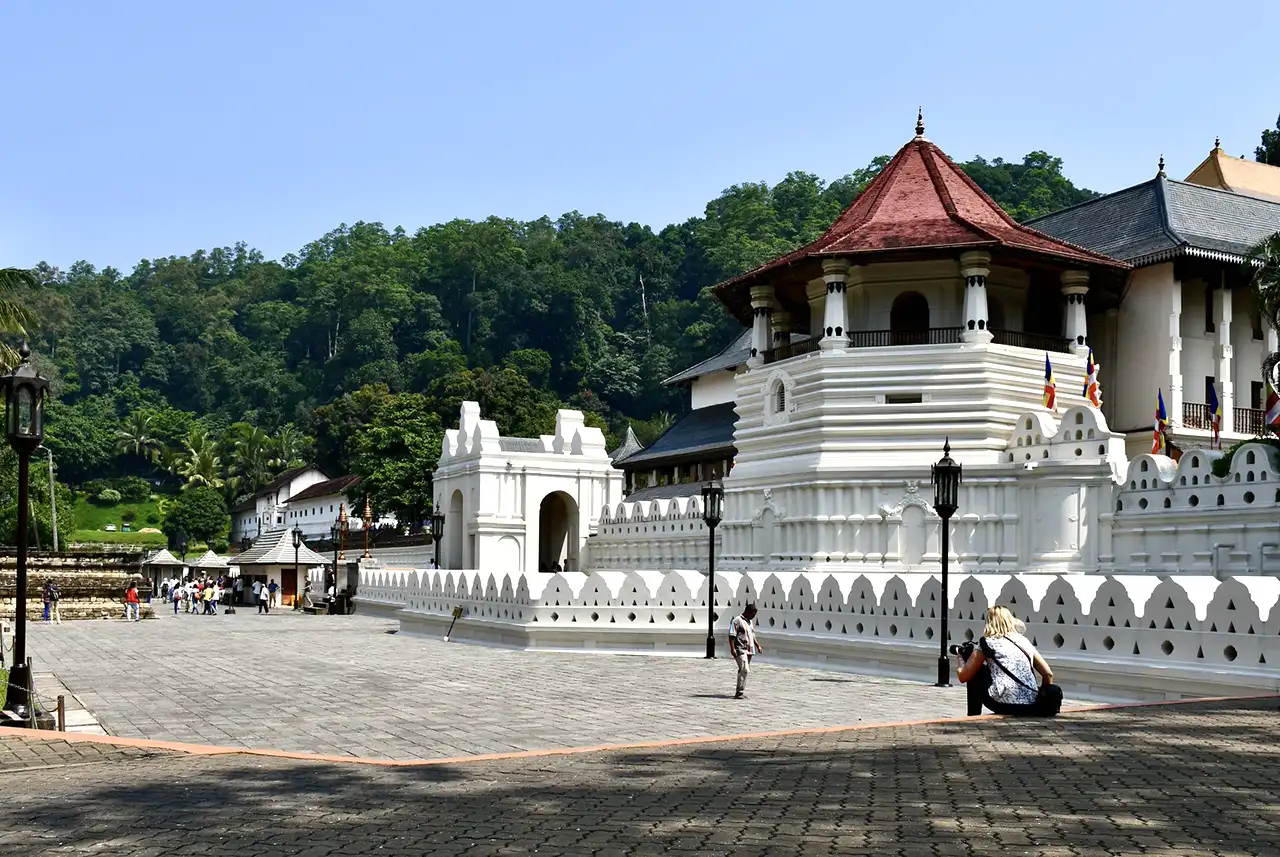
Visiting Kandy and the Temple of the Tooth is one of the essential things to do in Sri Lanka for those exploring the island’s cultural capital.
The Kandy to Ella train is one of Asia’s most beautiful rail rides, crossing tea-covered hills, stone viaducts, and small stations where the mist hangs in the trees. The full ride takes 6 to 7 hours, and the second-class observation car offers the best views.
Book reserved seats well ahead, especially from December to March. Trains sell out fast, and standing for six hours loses its charm. A shorter section from Nanu Oya to Ella still delivers the best scenery in about three and a half hours.
The ride suits couples, photographers, and anyone who values scenery over speed. Set aside half a day for the shorter section or a full day for the complete route.
Sri Lanka’s hill country is carpeted with tea estates, and a walk through the rows of bright green bushes, past pluckers with their baskets, is one of the island’s quieter pleasures. A tea factory tour shows the leaf-to-cup process, and a tasting at the end puts real flavor behind the term “Ceylon tea.”
Nuwara Eliya, Hatton, Haputale, and the Pekoe Trail sections around Ella all offer good walking. For a luxury stay, planter bungalows like Ceylon Tea Trails let you sleep inside a working estate, with private guided walks and afternoon tea on the veranda.
One to three nights in tea country suits slow travelers, luxury guests, and anyone who wants the island at its quietest and greenest.
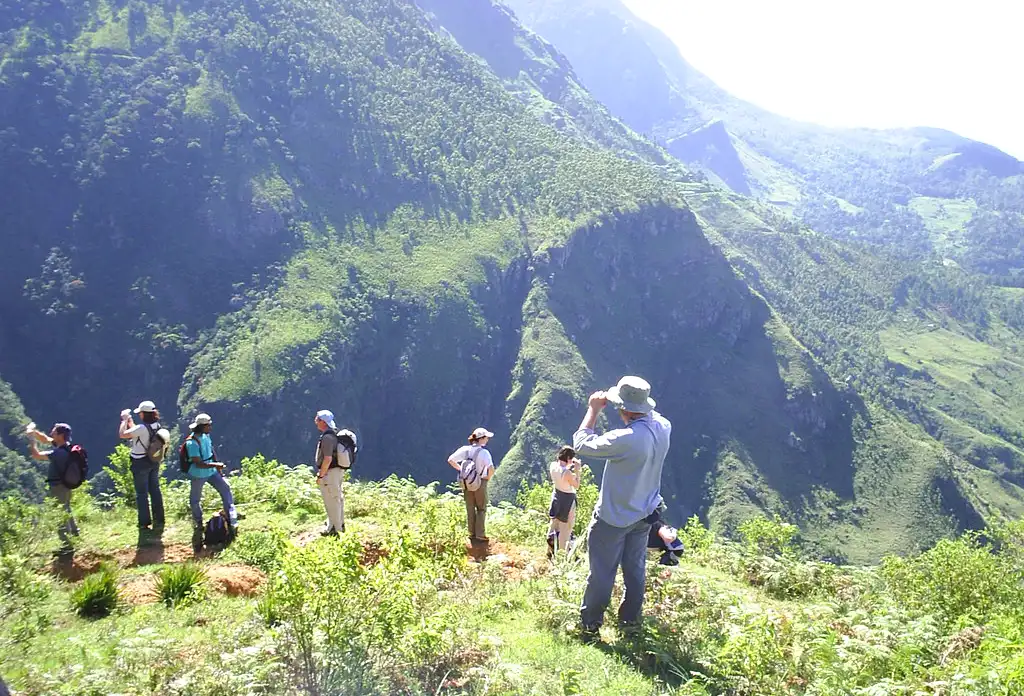
Hiking through the scenic landscapes of the hill country is one of the top things to do in Sri Lanka.
Ella is a small hill-country town with a big reputation. The Nine Arch Bridge, the old stone railway viaduct framed by jungle, draws photographers every morning when the train crosses around 9:15 a.m. Little Adam’s Peak offers a short sunrise hike, and Ravana Falls crashes down a cliff face just outside town.
Ella is popular, not remote. Expect cafes, backpackers, and company at the main viewpoints. Go early for photos and treat Ella as a base for soft hiking rather than a single-stop selfie.
One to two nights gives you time for the bridge, a sunrise hike, and the waterfalls without fighting the midday crowds.
Galle Fort is a walled Dutch-colonial old town on the southwest tip of the island, with cobbled lanes, boutique hotels, galleries, churches, a lighthouse, and sea walls you can walk at sunset. The afternoon light here is some of the best on the coast.
Stay inside the fort walls for at least one night. The restaurants and small hotels give the place a romantic, slow-paced atmosphere that suits couples and photographers. Combine Galle with a south-coast beach stretch for a strong finish to any loop.
Couples, photographers, and luxury travelers often call Galle their favorite stop. One to two nights inside the walls is the right pace.
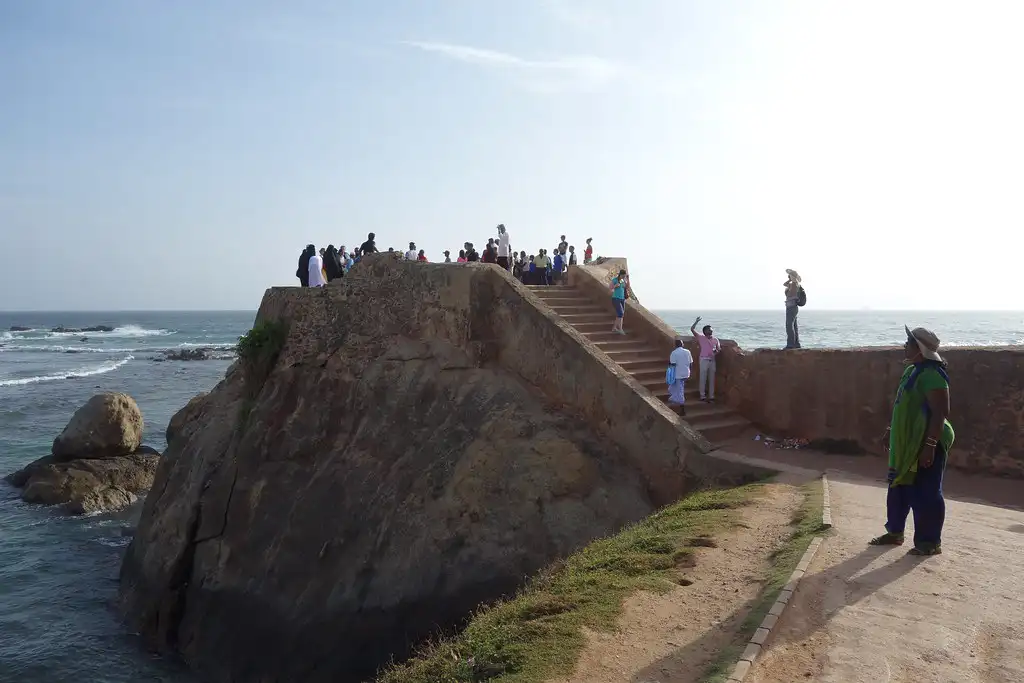
Walking the historic ramparts of Galle Fort is one of the top things to do in Sri Lanka.
Yala National Park sits on the dry southeastern coast and holds the world’s highest recorded density of leopards. Dawn drives in Block 1, putting you on dusty tracks between lagoons, waterholes, rock outcrops, and scrub, with elephants, crocodiles, peacocks, and painted storks sharing the park.
Choose a naturalist-led private drive over a shared jeep. A good guide reads the alarm calls and the fresh tracks, positions you for the light, and moves you to a quieter zone when a sighting draws a scrum. The difference between a private naturalist and a shared vehicle is the difference between watching a leopard in stillness and queuing in a line of engines.
Best for: Wildlife, photography. Time needed: 1 to 2 nights. Best season: February to July (dry).
Wilpattu is Sri Lanka’s largest park, and it trades Yala’s density and crowds for a wilder, quieter feel. Natural sand-rimmed lakes called villus dot the forest, and you can drive for an hour without meeting another vehicle.
Leopard and sloth bear live here, along with elephants and rich birdlife. A sighting in Wilpattu feels earned rather than staged. Serious wildlife travelers often visit both Wilpattu and Yala in the same circuit, starting with the quiet and finishing with the odds.
Wilpattu suits wildlife lovers who prefer a calmer, less trafficked safari atmosphere over the higher density of Yala.
From roughly July to October, hundreds of Asian elephants gather around the receding tanks at Minneriya, Kaudulla, or Hurulu Eco Park for The Gathering, one of Asia’s greatest wildlife events. Late-afternoon drives catch the herds as the light goes gold.
The best park changes with the water and the grass. A good operator follows the elephants on the day rather than locking one park into the contract. Let local naturalists make the call.
Best for: Wildlife, families, photography. Best season: July to October, peaking in August to September.
The south coast offers a string of beaches with distinct characters. Mirissa is a popular spot for swimming and whale-watching. Weligama suits beginner surfers. Hiriketiya draws a younger, surf-and-yoga crowd. Tangalle offers longer, emptier stretches. Bentota and Hikkaduwa sit further west with calmer waters and snorkeling.
The south coast runs best from December to March. April can still work. From May onward, the monsoon makes the water rougher and swimming less reliable.
Best for: Couples, surfers, families, beach rest. Suggested stay: 2 to 4 nights.
When the south and west coasts go wet from May onward, the east coast takes over. Trincomalee and Nilaveli offer calm turquoise water and good snorkeling. Pasikudah has a long, shallow bay suited to families. Arugam Bay draws surfers from around the world.
The East Coast is less developed and quieter. Getting there adds travel time, but the reward is a different Sri Lanka with Hindu temples, Tamil culture, and empty sand.
Best for: Surfers, snorkelers, second-time visitors. Best season: May to September.
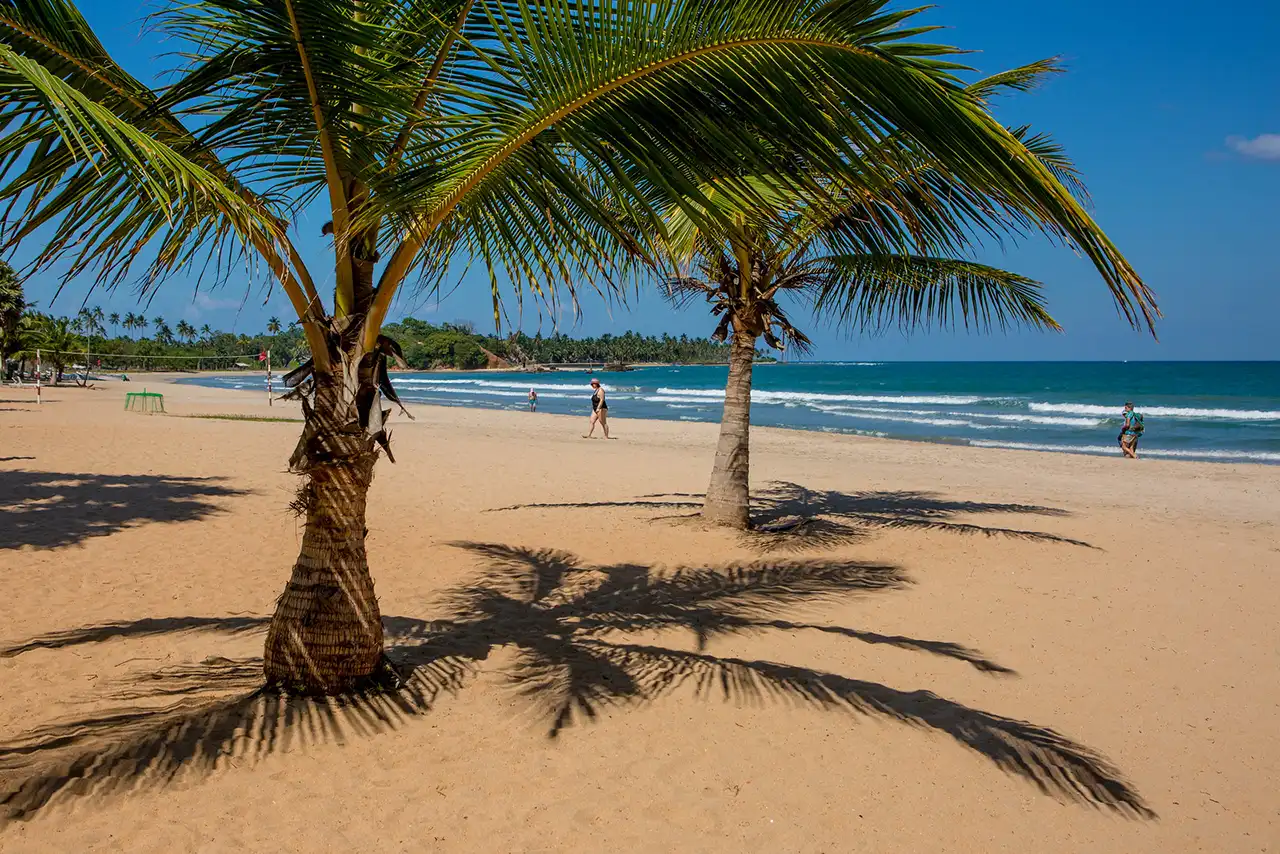
Visiting the quiet beaches of the east coast is one of the best things to do in Sri Lanka from May to September.
The blue whale, the largest animal ever to live, passes through the deep waters off Mirissa roughly from December to April. Boats leave early in the morning, and a marine guide helps you read the tall vertical spout against the horizon. Sperm whales and spinner dolphins share the same grounds.
Use a responsible operator who keeps a distance and idles the engines near the animals. The sea can be rough, so take motion-sickness medication if you need it. Some mornings, the whales stay far out or stay down, and the honest operators say so rather than chase.
Best for: Wildlife lovers, bucket-list seekers. Best season: December to April.
Weligama, on the south coast, is a gentle, sandy-bottomed bay where beginners take their first lessons. Board hire and instruction are cheap and easy. Arugam Bay on the east coast is a serious surf destination, with a right-hand point break that draws experienced riders from June to September.
Weligama runs best for beginners from November to April. Arugam Bay peaks for experienced riders from June to September.
Anuradhapura is one of the oldest continuously inhabited cities in the world and one of Sri Lanka’s most sacred places. White stupas the size of Egyptian pyramids rise above the forest, and pilgrims in white circles the Sri Maha Bodhi tree, grown from a cutting of the tree under which the Buddha attained enlightenment.
Rent a bicycle or hire a private guide to comfortably cover the spread-out ruins. Cover shoulders and knees, remove hats, and keep voices low in the sacred areas. Allow half a day to a full day. Culture travelers, pilgrims, and history lovers will want to linger at the stupas and the sacred tree.
Polonnaruwa is a more compact ancient city, with its ruins set in a parklike stretch of forest. The Gal Vihara, a set of four Buddha figures carved from a single granite slab, is one of the finest pieces of stone carving in South Asia. Cycling the site is the most pleasant way to see it.
Combine Polonnaruwa with Sigiriya and Minneriya on a Cultural Triangle loop. Half a day on a bicycle covers the site well. Photographers and history lovers can stretch it longer at the Gal Vihara.
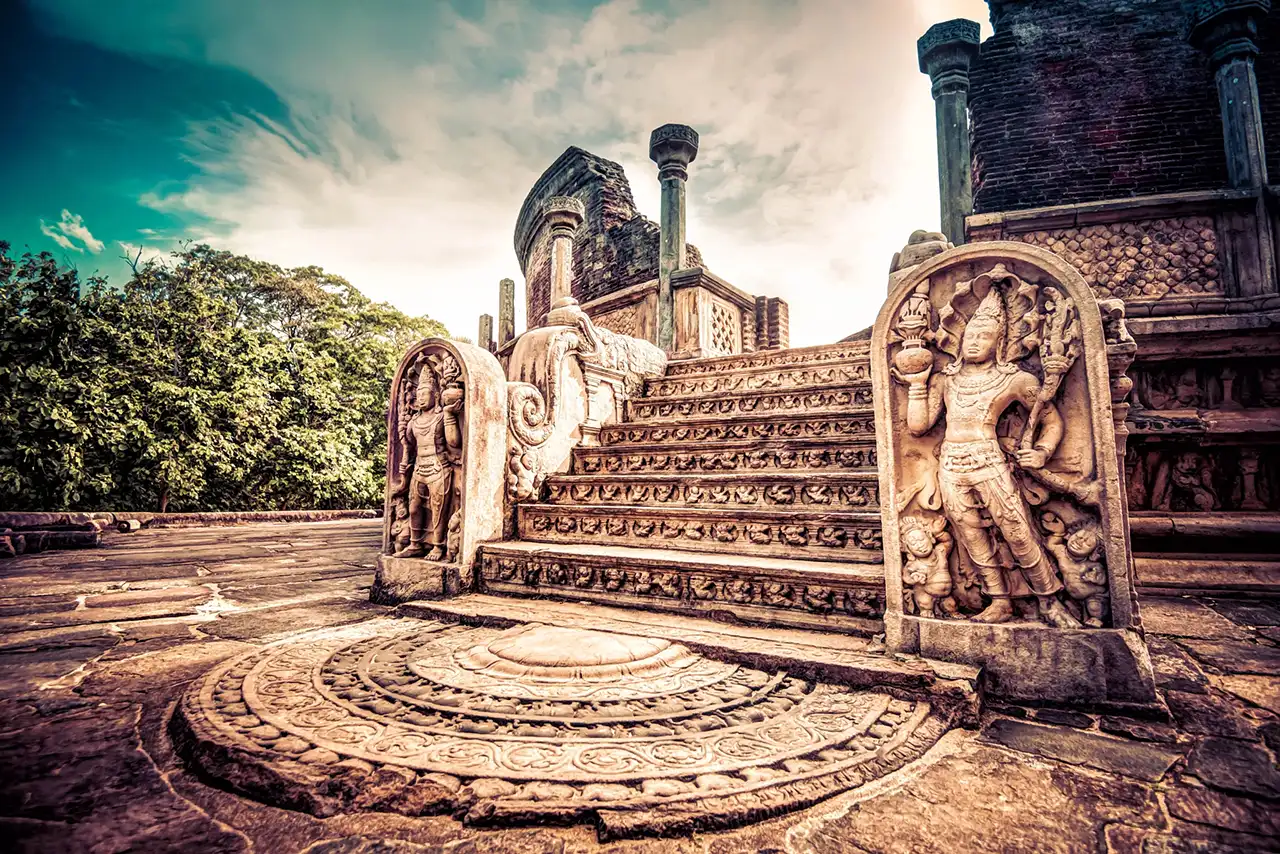
Cycling through the ancient ruins of Polonnaruwa is one of the top things to do in Sri Lanka for history lovers.
Horton Plains is a cool, windswept plateau above 2,000 meters, and the trail to World’s End reaches a cliff edge that drops 880 meters to the lowlands. The view is spectacular on a clear morning, but by 10:00 a.m., mist can roll in and close the panorama.
Start before 6:00 a.m. Wear walking shoes, a warm layer, and sunscreen. The round loop takes about three hours. Bring water and snacks, because there are no facilities on the trail.
Best for: Hiking, scenery, nature. Best time of day: Before 9:00 a.m.
Adam’s Peak (Sri Pada) is Sri Lanka’s most sacred mountain, and pilgrims of every faith climb the 5,500 steps through the night to reach the summit at sunrise. The season runs from December to May, and the busiest nights are full-moon poya days, when the line of headlamps reaches all the way up the mountain.
The climb takes three to four hours up from Dalhousie. A basic level of fitness helps. The reward at the top is a sunrise that lights up the entire hill country and a perfect triangular shadow of the peak cast across the clouds.
Best for: Pilgrimage, adventure, sunrise chasers. Season: December to May.
Colombo is not just an arrival city. The capital has a growing food scene, from street-stall kottu rotti in Pettah to modern Sri Lankan tasting menus in the Fort district. Gangaramaya Temple, the Independence Memorial, and the Dutch Hospital precinct are worth a few hours, and the Pettah market is loud, colorful, and full of life.
A food-focused city walk is one of the best half-day activities in Sri Lanka, especially at the start or end of a trip when the airport is close.
A half-day food walk on arrival or departure day is one of the smartest uses of Colombo time, especially for food lovers and city-culture fans.
Jaffna in the far north feels like a different country. The food is Tamil, the temples are Hindu, the coast is dotted with small islands, and the atmosphere is quieter and less touristed than the south.
Getting to Jaffna takes time, whether by domestic flight, long drive, or rain. The reward is a genuinely different Sri Lanka. Jaffna suits second-time visitors or travelers with 12 or more days.
Best for: Culture, food, off-the-beaten-path. Time needed: 2 to 3 nights.
Ayurveda in Sri Lanka is not a hotel spa add-on. A proper retreat involves a doctor consultation, a tailored treatment plan, daily herbal therapies, yoga, meditation, and a specific diet. Programs run from five nights to three weeks, and the results depend on the time you commit.
Serious retreats include Santani in the Kandy hills, Jetwing Ayurveda Pavilions in Negombo, and Barberyn on the south coast. A wellness close works well before or after a touring circuit, giving the body time to rest.
Best for: Wellness travelers, post-safari recovery. Time needed: 5 to 14 nights.
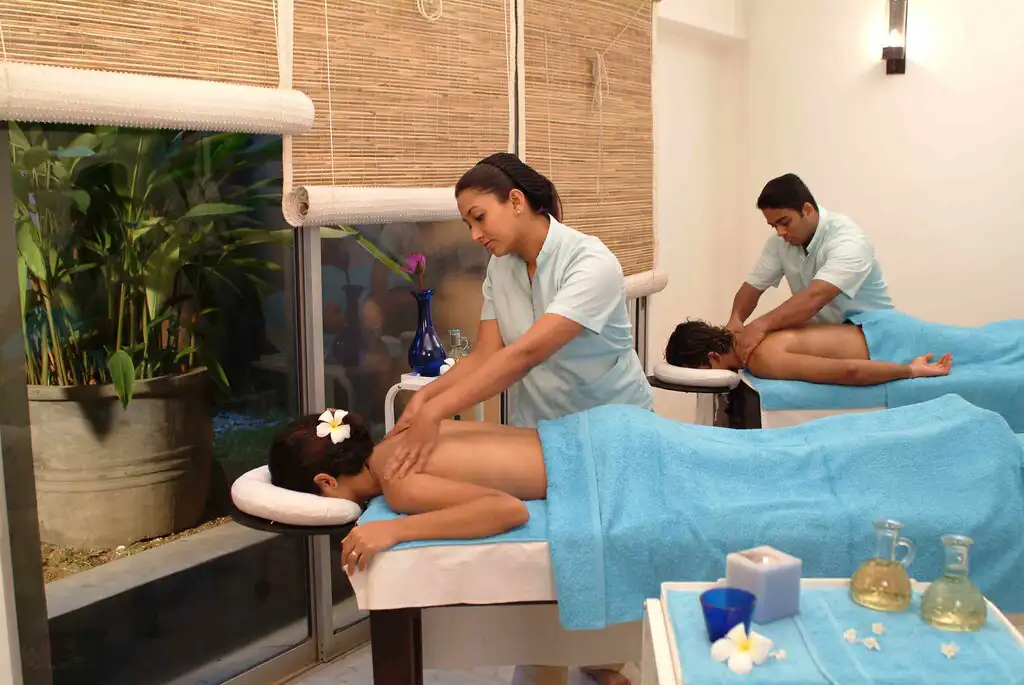
Immersing yourself in a doctor-led Ayurveda retreat is one of the most rejuvenating things to do in Sri Lanka.
Rice and curry are the island’s daily meal, and a cooking class takes you through the spice rack (cinnamon, cardamom, turmeric, curry leaves, coconut) and the coconut milk base that ties it all together. Many classes start with a market visit and end with a shared meal.
Good for families and couples. Available in Colombo, Galle, Kandy, Ella, and many boutique hotels.
A three- to four-hour class suits families, couples, and food lovers. Most run in the morning and end with a shared lunch.
A factory tour shows how the leaf is withered, rolled, fermented, dried, and sorted into grades. A tasting at the end lets you compare the difference between a golden tip and a broken pekoe. Factories operate across the hill country, and most welcome walk-in visitors.
A factory visit takes one to two hours and pairs naturally with a tea estate stay. It suits anyone curious about the craft behind the cup.
Sinharaja is a UNESCO-listed lowland rainforest and one of the best birding destinations in Sri Lanka. A guided forest walk takes you through dense, dripping canopy in search of mixed feeding flocks that can hold 20 or more species at once, including several endemics.
Leeches are part of the deal. Wear long socks, closed shoes, and bring repellent. The best access points sit south of the hill country, and the forest works as a detour between the hills and the coast.
Best for: Birders, nature lovers, rainforest walkers. Time needed: Half day to full day.
Sri Lanka gives movement and variety. The Maldives gives stillness and sea. The two combine naturally, with a short flight from Colombo to an overwater villa or a private island resort. Four to five nights in the Maldives after a Sri Lanka loop is one of the best twin-center trips in Asia.
Best for: Honeymooners, luxury travelers, anyone who wants a complete contrast.
Traveler Type | Best Experiences |
|---|---|
Couples | Galle Fort, tea country stay, scenic train, south coast beach, Ayurveda, Maldives |
Families | Elephant safari, beach stay, Sigiriya (early start), Colombo food tour, short train ride |
Luxury travelers | Boutique hotels, private chauffeur-guide, tea estate stay, naturalist-led safari, wellness retreat, Maldives |
Wildlife lovers | Yala, Wilpattu, Udawalawe, Minneriya, Sinharaja, Mirissa whale watching |
Adventure travelers | Surfing, Pekoe Trail, Ella hikes, Adam’s Peak, Sinharaja, white-water rafting |
Wellness travelers | Ayurveda retreat, yoga, forest walks, tea country slow travel |
Photographers | Sigiriya, Galle Fort, Kandy to Ella train, tea plantations, Nine Arch Bridge, national parks |
Start in the Cultural Triangle for Sigiriya at sunrise, ride the train through tea country, spend two nights in Galle Fort, and finish with three or four nights on the south coast or a Maldives extension. Add an Ayurveda retreat before or after the loop for a honeymoon pace.
Keep the route short and the drives manageable. An elephant safari, a beach stretch, Sigiriya with an early start to beat the heat, a cooking class, and a short train ride between Nanu Oya and Ella give children variety without exhausting anyone. Some safari camps set a minimum age, so check before booking.
A private chauffeur-guide changes everything about the pace. Add boutique hotels at each stop, a tea estate stay in the hills, naturalist-led safari drives with your own jeep, an Ayurveda retreat, and a Maldives villa finish. Route planning matters more than spending, because luxury in Sri Lanka is about timing and access, not scale.
Cultural Triangle: Explore Sigiriya Rock Fortress, Dambulla Cave Temple, the ancient ruins of Anuradhapura and Polonnaruwa, and the seasonal Minneriya elephant gathering.
Kandy and Hill Country: Visit the sacred Temple of the Tooth, stroll the Peradeniya botanical gardens, board the scenic highland train, and tour the tea estates of Nuwara Eliya.
Ella and Tea Country: Walk across the iconic Nine Arch Bridge, hike Little Adam’s Peak, trek sections of the Pekoe Trail, and experience leaf-to-cup factory tours.
South Coast: Stroll the historic ramparts of Galle Fort, swim at Mirissa or Tangalle beaches, surf the breaks at Weligama, track leopards in Yala, and join a whale-watching boat from Mirissa.
East Coast: Swim and snorkel in Trincomalee and Pasikudah, surf at Arugam Bay, and explore the quieter, less-developed side of the island.
Colombo and West Coast: Eat your way through Colombo’s food scene, browse the Pettah markets, and use Negombo or Bentota as a first- or last-night base near the airport.
North Sri Lanka: Travel to Jaffna for Hindu temples, Tamil food, and a side of the island most visitors never see. Best suited to longer itineraries of 12 days or more.
Route: Colombo to Sigiriya to Kandy to Ella to Galle or the south coast to Colombo.
Best for first-time visitors with limited time. The seven-day loop covers culture, hill country, the scenic train, and a coastal finish. Keep each stop to one or two nights and resist the urge to add more.
Route: Colombo to Sigiriya to Kandy to Ella to Yala to Galle or Mirissa to Colombo.
Ten days adds a safari and a proper beach stay. Yala fits between Ella and the south coast, and the extra days let you breathe at each stop rather than race.
Route: Sri Lanka culture and coast (8 to 9 days) to Maldives overwater villa (4 to 5 days).
Best for honeymooners and luxury couples who want both variety and pure rest. Sri Lanka gives temples, tea, leopards, and coast. The Maldives gives reef, sand, and stillness.
Route: Colombo to Cultural Triangle to Kandy to tea country to Ella to Yala to south coast to Galle to Colombo.
Fourteen days allow a complete island loop without rushing. Add Wilpattu at the start, Sinharaja as a forest detour, Jaffna in the north, or an Ayurveda close to the end.
Trip Length | Best Focus |
|---|---|
5 to 6 days | Sigiriya, Kandy, Galle, or a beach stretch |
7 days | Cultural Triangle, Kandy, Ella, Galle |
10 days | Culture, hill country, safari, beach |
12 days | Sri Lanka and the Maldives combination |
14 days | Full island circuit with wildlife and coast |
Read More: Sri Lanka Tour Packages
The south and west coasts are driest from December to March. The East Coast runs best from May to September. The hill country is generally pleasant year-round, with cooler temperatures and occasional rain. Wildlife parks are at their peak during their dry months, and the elephant gathering builds from July to October.
No single month is perfect everywhere. Pick your route first, then match the season.
Season | Best Experiences |
|---|---|
December to March | South coast, Galle, Mirissa, hill country, classic route |
April | Culture, early starts, festivals, shoulder season |
May to September | East coast, Cultural Triangle, Arugam Bay, elephant gathering |
October to November | Flexible cultural travel, wellness, and lower crowds |
Read More: Best Time to Visit Sri Lanka: The Ultimate Monsoon and Weather Guide
Sri Lanka looks small, but roads wind through mountains and towns, and a 150-kilometer leg can take four hours. A private chauffeur-guide is the most comfortable way to travel between regions, turning the drive into part of the trip rather than dead time.
Avoid too many one-night stays. Two nights in each place gives you a full day without packing and moving.
Cover shoulders and knees at every Buddhist and Hindu temple. Remove shoes and hats before entering sacred areas. Respect photography rules, especially around statues and relics, and keep your voice low.
No sighting is ever guaranteed, and any operator who promises one is cutting corners. Choose naturalist-led drives, keep a respectful distance from animals, stay on the track, and never feed wildlife. Avoid any attraction that involves chains, rides, or performances with elephants or other animals.
Sea conditions vary by coast and season. Swimming is not always safe, especially on the south coast from May to October when currents strengthen. Check local advice daily, and use beaches with lifeguards where possible. Whale-watching boats depend on weather, and early-season trips can be choppy.
The single most common mistake is trying to see everything in one week. Sri Lanka rewards slower pacing, and a good trip balances culture, nature, rest, and travel time rather than ticking a long list. Choose fewer regions, stay two nights in each, and leave room for an unplanned stop or a slow afternoon.
What is Sri Lanka best known for?
Sri Lanka is known for ancient cultural sites, tea country, wildlife safaris, tropical beaches, Ayurveda wellness, scenic train rides, and warm hospitality. The island holds eight UNESCO World Heritage Sites and some of Asia’s best national parks.
What should I not miss in Sri Lanka?
First-time visitors should not miss Sigiriya, Dambulla, Kandy, the scenic train to Ella, Galle Fort, a wildlife safari, tea country, and at least one beach region. Adding a second park or a Maldives extension lifts the trip further.
How many days are enough for Sri Lanka?
Seven days works for a short highlights loop. Ten to twelve days gives a better balance of culture, hill country, wildlife, and beach. Fourteen days allows a complete island circuit or a combination with the Maldives.
What is the most beautiful part of Sri Lanka?
The answer depends on what you love. Many travelers choose Ella and the tea hills for their scenery, Galle Fort for its heritage, Sigiriya for its culture, and the south or east coast for its beaches. Each region has a different character.
Is Sri Lanka good for a honeymoon?
Yes. Couples can combine boutique hotels, cultural sites, tea country, beach resorts, private safaris, Ayurveda retreats, and a Maldives extension. The variety makes it one of Asia’s best honeymoon destinations.
What is the best safari in Sri Lanka?
Yala is most famous for leopards, with the world’s highest recorded density. Wilpattu offers a quieter, wilder experience. Udawalawe is strong for elephants. Minneriya and Kaudulla deliver the seasonal elephant gathering from July to October.
What are the best beaches in Sri Lanka?
Popular beaches include Mirissa, Weligama, Unawatuna, Tangalle, Bentota, Hikkaduwa, Trincomalee, Pasikudah, and Arugam Bay. The best coast depends on the season: south and west from December to March, east from May to September.
Is the Kandy to Ella train worth it?
Yes. The Kandy to Ella route is one of Asia’s most scenic train rides, crossing tea-covered hills, stone bridges, and misty stations. Book reserved seats early and keep plans flexible during peak season.
What are the best things to do in Sri Lanka with family?
Families enjoy elephant safaris, beaches, short cultural visits like Sigiriya, tea country, cooking classes, easy hikes in Ella, and relaxed boutique hotel stays. Keep drives short and allow rest days.
What are the top things to do in Sri Lanka for couples?
Couples often enjoy Galle Fort, tea estate stays, south coast beaches, private safaris, Ayurveda retreats, the scenic train, and a Maldives extension.
Is Sri Lanka expensive to visit?
Sri Lanka can suit different budgets. Luxury trips cost more because of boutique hotels, private guiding, safari camps, and premium beach resorts, but the island offers strong value compared with many other destinations.
Can I combine Sri Lanka with the Maldives?
Yes. Sri Lanka and the Maldives go well together. Sri Lanka offers culture, wildlife, and scenery, while the Maldives offers beach relaxation and private-island luxury. A short flight from Colombo connects the two.
What is the best time to visit Sri Lanka?
The best time depends on the coast and route. December to March is strong for the South and West Coast itineraries. May to September suits the East Coast. The hill country and the Cultural Triangle operate year-round, with some seasonal variation.
Is Sri Lanka safe for tourists?
International travelers widely visit Sri Lanka, and safety standards are generally good. Follow current travel advice, use trusted transport, respect local customs, and check updated conditions before you travel.
Read →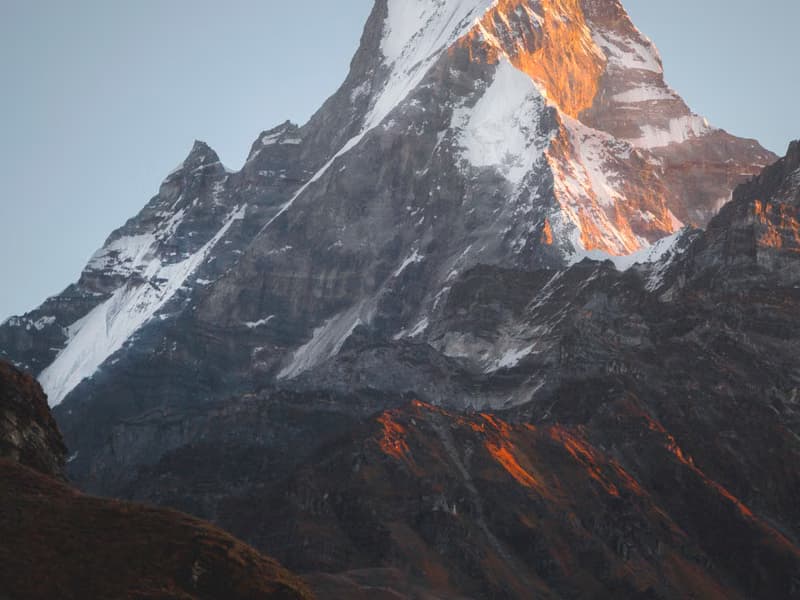 South Asia
Nepal has two answers to "when should I come?" — the short one and the honest one. The short answer is October to November and March to April. The honest answer is that every month works for someone, and the right month depends on what you want your trip to be.
October–November is the classic window: monsoon-washed air and the year's sharpest mountain views.
March–April is the second peak, with warm days and rhododendron forests in full colour.
December–February is cold but clear — superb for valley culture, safaris and quiet lower treks.
June–September is monsoon, yet Upper Mustang and Dolpo sit in the rain shadow and stay dry.
Nepal's weather runs on the monsoon. From roughly June to September, moist air pushes up from the Bay of Bengal and drops most of the country's annual rain. When it withdraws in late September, it leaves the clearest skies of the year behind it. The country then dries and cools through winter, warms through spring, and the cycle begins again.
That single rhythm creates two prime windows — autumn and spring — and two quieter seasons that reward travellers who know where to point them. We plan around all four from our Kathmandu office, because each one suits a different kind of trip.
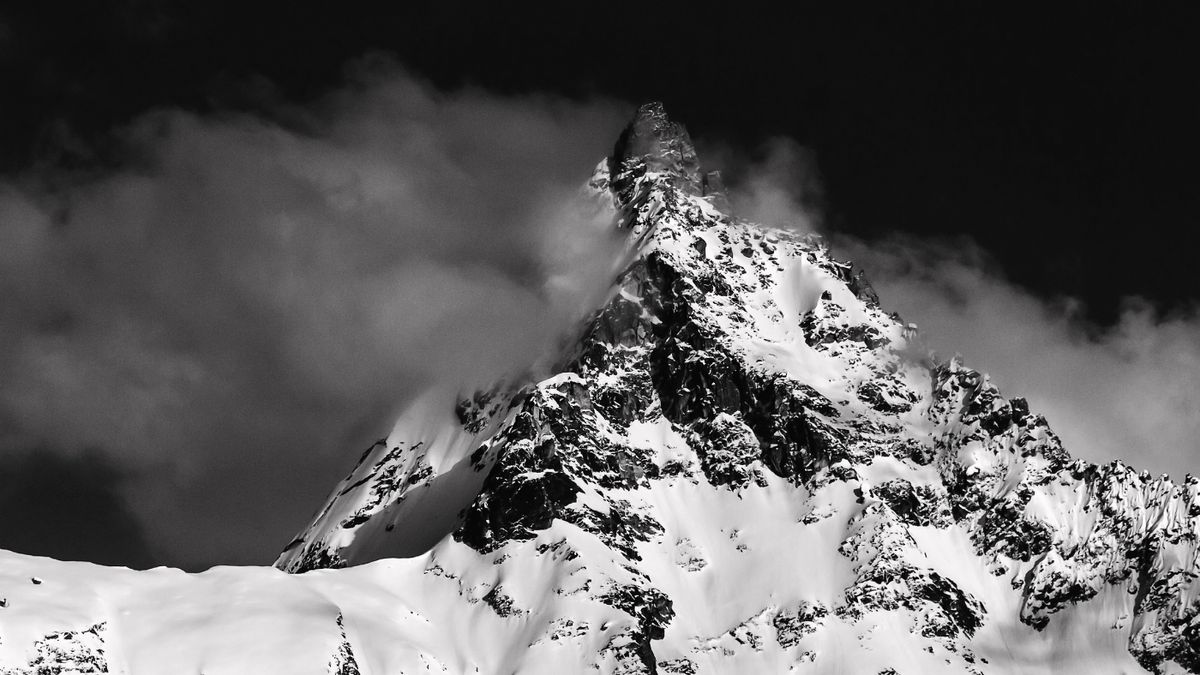
Post-monsoon clarity. By late October the rains have scrubbed the air clean, and ranges like this stay visible from dawn until mid-afternoon — the views trekkers cross the world for.
Autumn is Nepal at full strength. Daytime trekking temperatures sit between 10 and 20 Celsius at middle altitudes, the air is at its clearest, and the great festivals of Dashain and Tihar fill the valley towns with light. Every classic route is open, from Everest Base Camp to the Annapurna.
The trade-off is company. This is the busiest season on the famous trails, which is exactly why we book the best lodges months ahead and time each day to walk ahead of the crowds. Book autumn treks by June if you want the rooms with the windows.
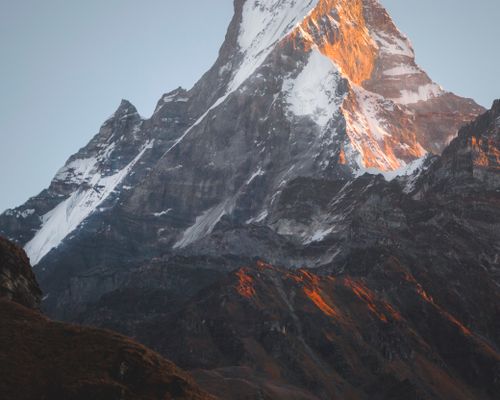
Featured journey · Best in Oct–Nov
14 days·Moderate·From US$3,840
Winter divides people, and we like it that way. Nights at altitude are genuinely cold, down to about minus 15 Celsius at the highest lodges. Days, though, are often brilliantly clear, and the trails are nearly empty. The Kathmandu Valley stays mild, Chitwan's wildlife viewing peaks as the grass dies back, and lower treks like Ghorepani are at their most peaceful.
Winter is also when a helicopter earns its keep. You sleep low and warm, and still stand above the icefall by breakfast.

Featured journey · Flies year-round
Spring is autumn's warmer twin. The rhododendron forests between 2,000 and 3,500 metres turn whole hillsides red and pink, days lengthen, and the high passes reopen. Haze builds from the lowlands as the weeks pass, so the earlier in spring you trek, the sharper the views.
This is also expedition season on Everest itself. Base Camp in April hums with climbing teams, which gives the trek a theatre the autumn version lacks.

Spring on the trail. Our guests with their guide in the Khumbu — mild days, flowering ridgelines and expedition season buzz make March and April the sociable choice.
The monsoon turns the middle hills lush and dramatic, but clouds hide the peaks and trails turn to leeches and mud. We rarely send trekkers to Everest or the Annapurna in July. We do send them to Upper Mustang and Dolpo, which sit behind the Himalayan wall in a rain shadow and stay dry while the rest of the country pours.
Monsoon also means green rice terraces, thundering rivers, empty hotels and the valley's most photogenic light between showers. For culture-first travellers on a budget calendar, it is a genuine option, not a compromise.
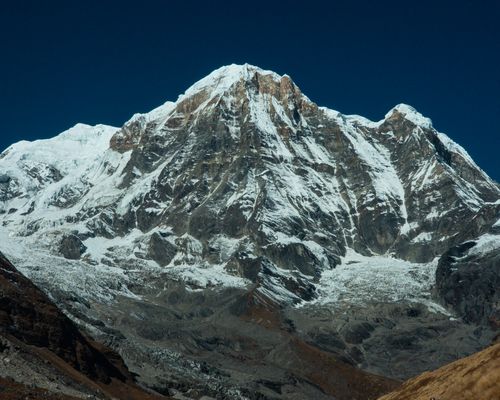
Featured journey · Best in Jun–Sep
11 days·Moderate·From US$3,150
Wind-carved canyons, cave monasteries and Lo Manthang's mud walls — dry even at monsoon's height.
Season | Months | What to expect | Best for |
|---|---|---|---|
Autumn | Oct – Nov | Clearest skies of the year, mild days, busy classic trails | Everest & Annapurna treks, festivals |
Winter | Dec – Feb | Cold nights, crisp clear days, quiet trails and towns | Valley culture, Chitwan safaris, lower treks |
Spring | Mar – Apr | Warm days, rhododendron bloom, haze building late | Colourful trekking, Everest expedition season |
Monsoon | May – Sep | Daily rain, green hills, hidden peaks, empty hotels | Upper Mustang, Dolpo, culture & value |
Start from the trip, not the calendar. Mountain views above everything: late October to mid-November. Fewer people and lower prices, views still strong: early December or late September. Flowers and festival energy: late March. A monsoon-season calendar you cannot move: Mustang, and thank the rain shadow.
Send us your dates and we will tell you honestly what those weeks are like — and route around their weaknesses. That judgement is the difference a Kathmandu-based designer makes.
Designer's noteBook autumn treks by June and spring treks by January. The best lodges hold few rooms, and the difference between a good room and the room with the mountain window is booked months, not weeks, ahead.
Read →